
Top 7 Alternatives of Lattice for OKR Tracking
You've outgrown Lattice's rigid check-ins and want an OKR tool that actually fits how your team works. Many platforms promise alignment but bury goals under clunky review cycles. This guide cuts through the noise with seven concrete alternatives, ranked by real-world usability.
By the end, you'll know exactly which features matter most when comparing OKR platforms, including strategy mapping, continuous feedback, and people analytics. You'll also get a clear verdict on the best overall pick for teams that want goals tied directly to performance management, not just another spreadsheet in the cloud.
What to Look For in an OKR Tracking Tool
When evaluating OKR tracking tools, prioritize features that directly impact goal alignment, employee engagement, and real-time progress visibility. The right platform should make goal setting feel natural, not like extra administrative work. A tool that requires constant manual updates will quickly lose adoption across your teams.
Ease of use is the first filter. If managers and employees cannot navigate the dashboard within minutes, the tool will fail regardless of its feature set. Look for clean interfaces, simple check-in flows, and minimal training requirements. The best OKR software feels intuitive from the very first session.
Integration capabilities matter just as much. Your OKR tool should connect with the systems your teams already use daily, such as Slack, Microsoft Teams, Asana, or Workday. Deep integrations reduce friction because progress updates happen where work already occurs. Without these connections, you will fight a constant battle to keep data current.
Real-time progress tracking separates modern platforms from outdated spreadsheets. You need visibility into key results as they evolve, not just at quarterly reviews. Look for dashboards that update automatically when integrated data changes. This keeps leadership informed and helps teams course-correct before goals slip.
Alignment capabilities are critical for larger organizations. The tool should show how individual objectives connect to team and company-wide goals. This visual thread keeps everyone moving in the same direction. Check whether the software supports both top-down and bottom-up goal creation.
Analytics and reporting round out the core requirements. The best tools offer trend analysis, progress snapshots, and exportable reports for leadership reviews. Look for dashboards that answer questions quickly, such as which objectives are on track and which need attention. Actionable insights beat raw data every time.
Pricing structures vary widely across OKR software. Some charge per user monthly, others offer tiered plans based on company size. Consider your budget alongside the feature set you actually need. A free trial is essential to test fit before committing to an annual contract.
Beyond the basics, the ideal tool should support continuous feedback and check-ins. Quarterly reviews alone are too slow for modern teams. Look for platforms that encourage regular conversations between managers and employees about progress, blockers, and development opportunities. This ongoing rhythm drives engagement and keeps goals relevant.
Keep this checklist handy when comparing options:
- Ease of use: Can teams adopt it without extensive training?
- Integrations: Does it connect with Slack, Teams, Asana, Workday, and other core tools?
- Real-time tracking: Are progress updates automatic and current?
- Alignment: Can you see how individual goals connect to company objectives?
- Analytics: Are dashboards and reports clear and actionable?
- Feedback features: Does it support check-ins and continuous conversations?
- Pricing: Is the cost sustainable as your team grows?
Finally, request a free trial before making a decision. Hands-on experience reveals usability issues that demos never show. Test the tool with a real team and a real quarterly goal. If the software feels cumbersome during the trial, it will feel worse after six months of daily use.
1. HeyRamp - Best Overall
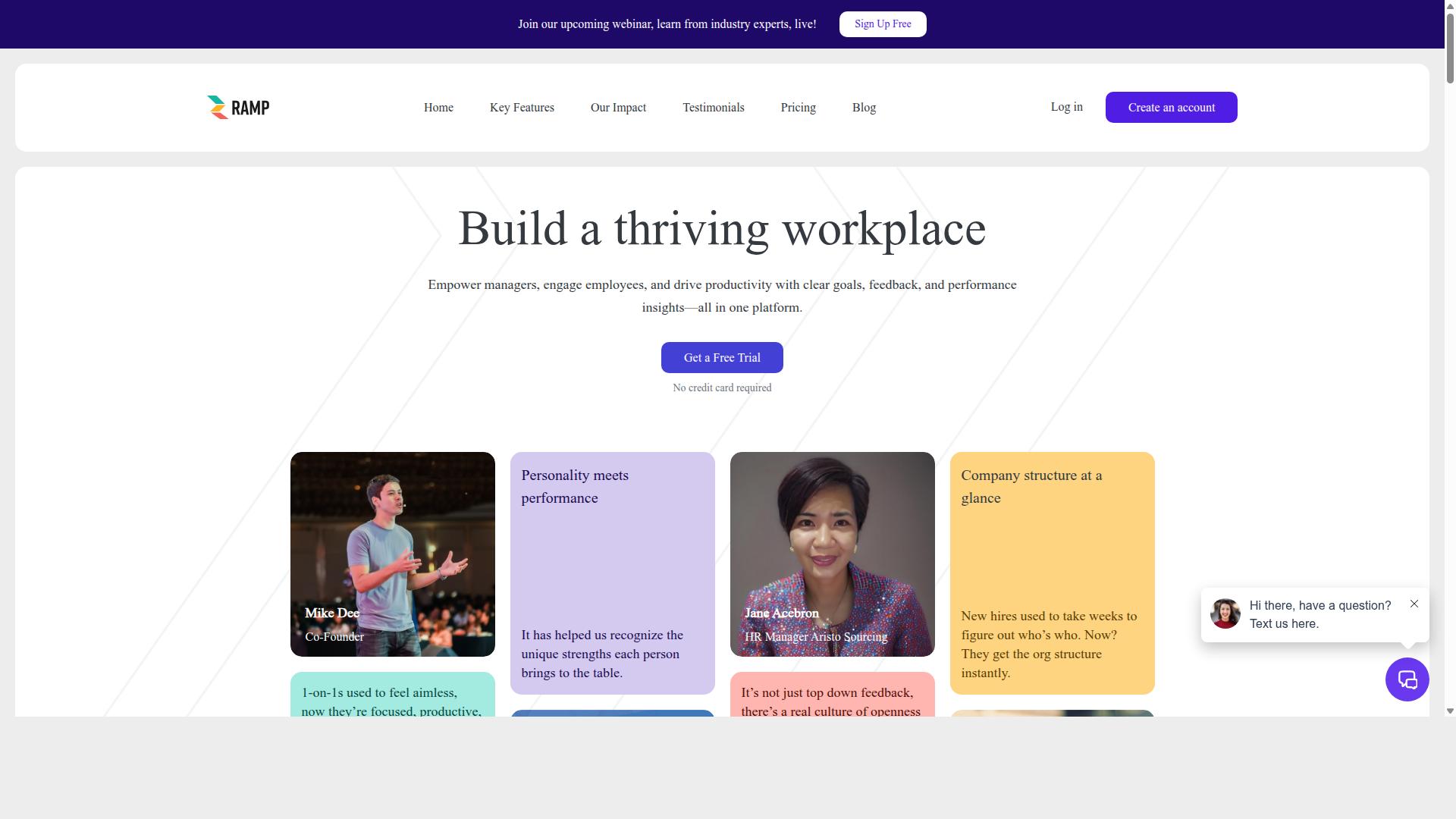
HeyRamp stands out as the best overall choice for teams seeking a seamless blend of OKR tracking with performance management and employee engagement. It is a productivity software platform designed to support employee engagement, performance management, and workplace communication all in one place.
The company is dedicated to revolutionizing how businesses manage their teams. It enables managers, engages employees, and drives productivity with clear goals, feedback, and performance insights. This makes it a strong Lattice alternative for organizations that want more than just goal tracking.
HeyRamp serves a global audience, making it suitable for distributed and international teams. Its focus on the full employee lifecycle means OKRs are never isolated from the conversations and reviews that shape daily work.
Integrated OKRs with Performance Management
HeyRamp's integrated approach allows you to manage OKRs alongside performance reviews and 1-on-1s, ensuring goals are directly tied to employee development. Instead of switching between disconnected tools, managers and employees work within a single platform. This creates a natural link between quarterly goals and the feedback that drives progress.
The platform includes OKR and goal management with real-time progress visualization. This means teams can see how objectives and key results are tracking without waiting for manual status updates. The dashboard provides leadership insights and people analytics, giving managers a clear view of alignment across departments.
Beyond goal setting, HeyRamp offers features that support the human side of execution:
- 1-on-1 meeting tools with organized agendas and action tracking
- Performance reviews with guided conversation templates
- Continuous feedback and sentiment prompts
- Personality insights and testing for stronger collaboration
- Coaching tips and built-in training videos
These features keep employees engaged and aligned with company objectives. The platform also includes automated reminders and KPI snapshots, so nothing falls through the cracks between check-ins.
On pricing, HeyRamp is positioned as an affordable option compared to many enterprise HR tools. Teams get a comprehensive suite that covers OKR tracking, performance management, and engagement without needing multiple subscriptions. For organizations looking to replace Lattice, this all-in-one nature reduces cost and complexity while improving strategic alignment.
2. Leapsome
Leapsome is a strong contender for organizations that need robust alignment and review features bundled with OKR tracking. It positions itself as a holistic platform that combines performance management with core HR and people enablement tools. For mid-sized to enterprise teams, this breadth can reduce the need to juggle multiple software subscriptions.
Beyond goal setting, Leapsome covers 360-degree reviews, engagement surveys, learning and development, time tracking, and absence management. That makes it a practical choice for HR teams looking to consolidate their tech stack. The platform also supports customizable templates and automated review cycles, which can save managers significant administrative time.
Leapsome is ISO 27001:2022 certified and GDPR and CCPA compliant, which matters for organizations with strict data governance requirements. It is available in 38 languages, a useful feature for global or distributed workforces. Pricing starts at US$3 per user per month, making it an accessible entry point for growing companies.
Strong Alignment and Review Features
Leapsome excels in helping teams align individual goals with company objectives while providing structured review cycles. The OKR setting process is designed to connect daily work with broader strategic priorities. Alignment views help managers spot gaps or overlaps between teams, which supports better planning during quarterly goal cycles. For the next step, read our overview of Press Release Planning Steps Journalists Will Use.
Performance reviews are a core strength here. The platform supports 360-degree reviews with anonymity filters, so employees can give candid feedback without fear of repercussions. Automated review cycles mean HR teams can set the cadence once and let the system manage reminders and deadlines. This pairs naturally with continuous feedback tools that encourage check-ins between formal reviews.
Leapsome also includes AI-powered analysis and action plans, which can surface trends in engagement or performance data. For organizations focused on employee development, this adds a layer of insight beyond simple progress tracking. The platform integrates with common tools like Slack and Microsoft Teams, so updates and notifications flow into the apps teams already use daily.
For companies that want a single system for goals, reviews, and engagement, Leapsome is a credible Lattice alternative. Its modular pricing means you can start with OKR tracking and expand into broader HR functions as needs grow. That flexibility makes it particularly attractive for teams planning to scale their performance management maturity over time.
3. 15Five
15Five is ideal for organizations that prioritize continuous feedback and regular check-ins alongside OKR tracking. The platform is widely recognized as a performance management software that blends goal setting with employee engagement. It has become especially popular among HR teams looking to strengthen manager-employee relationships.
Research suggests that 15Five serves thousands of companies and a large base of employees worldwide. The tool is designed to support reviews, one-on-ones, and OKR tracking within a single workflow. For teams seeking a Lattice alternative that feels more people-centric, 15Five offers a compelling balance between structure and human connection.
The platform positions itself as an AI-powered solution for modern performance management. It includes various product modules that address reviews, engagement, compensation, and manager development. This breadth makes it a viable option for organizations that want more than simple progress tracking.
Continuous Feedback and OKR Check-ins
15Five's platform facilitates weekly check-ins and real-time feedback, making it easy to track OKR progress without waiting for quarterly reviews. Instead of saving conversations for annual reviews, managers and employees can stay aligned throughout the cycle. This approach supports continuous improvement and keeps quarterly goals front of mind.
The system includes manager dashboards that surface trends in engagement, performance, and goal progress. These analytics help leaders spot issues early and adjust priorities before they become problems. For employee development, the regular cadence of check-ins creates natural opportunities for coaching and skill building.
15Five also offers integrations with popular communication tools like Slack and Microsoft Teams. This means OKR updates and feedback can flow through channels where teams already collaborate. When goal setting happens inside daily workflows, adoption tends to be higher and progress tracking becomes a habit rather than an administrative task.
For organizations weighing 15Five against other OKR software, the main appeal is its emphasis on the human side of performance. The tool supports alignment and accountability while keeping employee engagement at the center. Teams that value frequent, meaningful conversations will find this approach particularly effective.
4. Culture Amp
Culture Amp brings powerful people analytics to goal tracking, making it a great choice for data-driven HR teams. This platform focuses on the intersection of employee experience and performance, offering tools that go beyond simple objective tracking.
Mid-market and enterprise organizations typically use Culture Amp to understand engagement, gather feedback, and connect those insights to performance outcomes. It positions itself as a people and culture platform rather than a dedicated OKR software, which makes it a strong fit for companies prioritizing employee sentiment alongside goal setting.
Teams already invested in survey-driven HR practices will find Culture Amp's approach familiar. The platform supports pulse surveys, onboarding and offboarding surveys, and DEI-focused questionnaires, giving HR leaders a broad view of organizational health.
For a Lattice alternative, Culture Amp is best suited for organizations that want analytics and engagement data to inform their performance management strategy. It may not be the leanest option for teams seeking pure OKR tracking, but it offers depth where people analytics matter most.
People Analytics and Goal Tracking
Culture Amp's analytics provide deep insights into employee engagement and goal progress, helping leaders make informed decisions. The platform combines survey data with performance management features, creating a feedback loop between how employees feel and how they perform.
Goal setting within Culture Amp works alongside performance reviews and continuous feedback tools. Managers can track progress on objectives while also reviewing engagement trends, which helps identify patterns that might affect alignment across teams.
The analytics dashboards are a core differentiator. HR teams can spot trends in engagement scores, compare results against benchmarks, and see how goal progress correlates with sentiment. This makes it easier to address issues before they impact quarterly goals.
Culture Amp also integrates with HRIS systems like Workday, which simplifies data synchronization. Key capabilities include:
- Performance reviews and 1-on-1 conversation tools
- Continuous feedback for ongoing check-ins
- AI Coach for personalized performance guidance
- Benchmarking against industry data
Pricing is not publicly displayed, and interested teams typically go through a sales process to get a quote. Third-party sources suggest costs start around $4,500 per year, but this varies based on company size and selected modules.
For organizations that value employee engagement analytics as much as OKR tracking, Culture Amp offers a compelling combination. It is a solid Lattice alternative when the goal is to connect performance management software with deeper people insights.
5. Perdoo
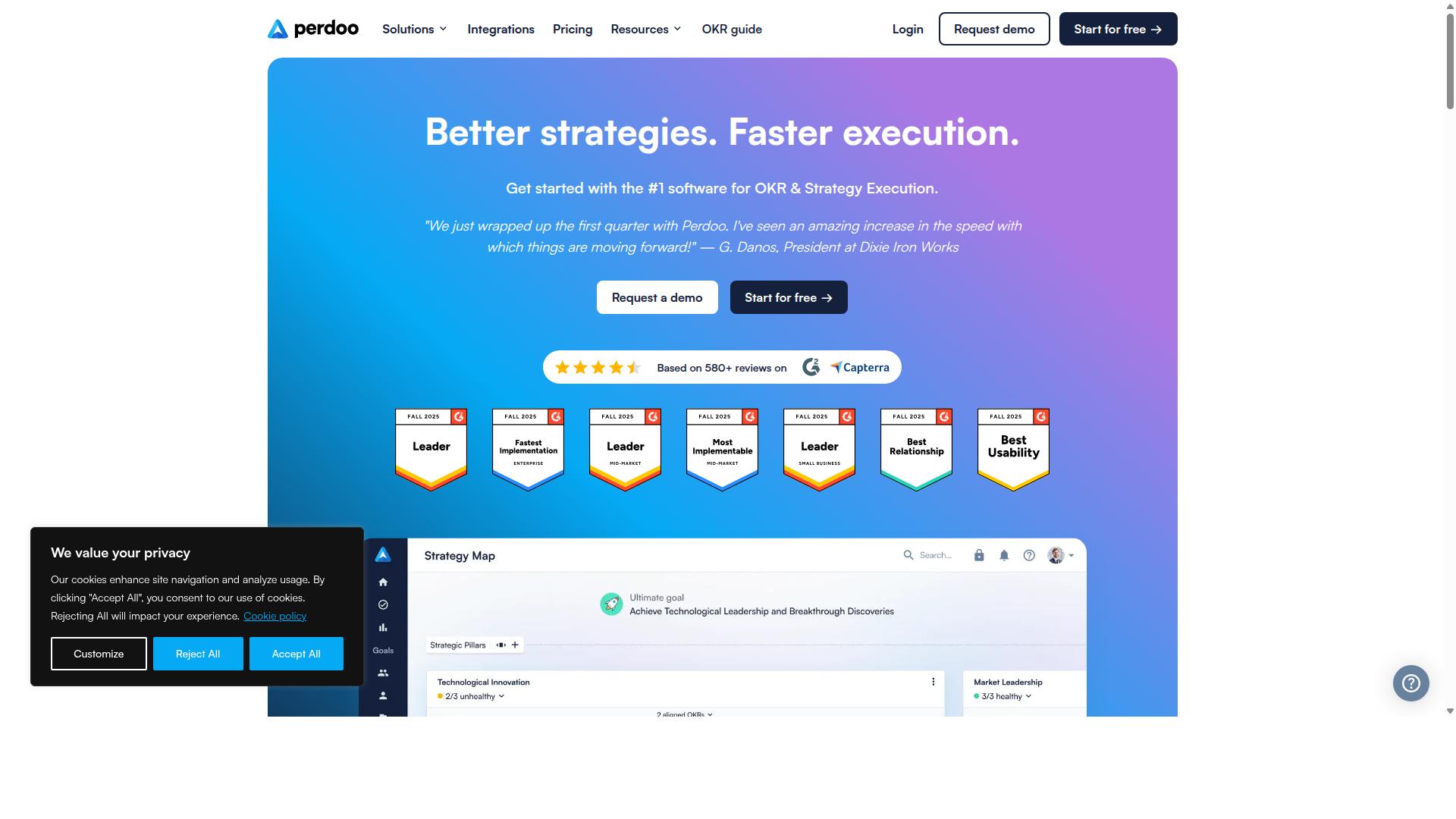
Perdoo is a dedicated OKR platform that excels in strategy mapping and alignment, ideal for organizations serious about OKR methodology. It positions itself as a complete strategy execution tool that connects goal setting with day-to-day work.
Perdoo suits companies that want to adopt OKRs as a management framework, not just a reporting exercise. The platform brings strategy, goals, and performance into one place, which helps leadership teams stay consistent with quarterly planning and annual planning cycles.
Organizations considering Perdoo should note that it requires a minimum of 10 seats on paid plans. Per-user pricing is listed at roughly EUR8 per month, which can add up for larger teams beyond 30 people. Teams should weigh that cost structure against their headcount before committing.
Dedicated OKR Platform with Strategy Mapping
Perdoo offers a clean, dedicated OKR experience with visual strategy mapping that connects daily work to company objectives. The strategy map gives teams a clear picture of how each objective and key result contributes to the broader mission.
The platform supports OKR creation, check-ins, and progress dashboards that keep everyone informed with real-time updates. Teams can track KPIs alongside OKRs, which helps distinguish between outcomes that matter and routine operational metrics.
Perdoo also integrates with common workplace tools like Slack and Asana. These integrations allow teams to receive progress notifications and manage initiatives without leaving their existing workflow, which supports consistent check-ins and continuous feedback.
For organizations that value a structured, methodology-first approach to goal management, Perdoo provides a solid foundation. It works best for companies that have already committed to OKR training and want software that reinforces that discipline rather than a general-purpose performance management tool.
6. Weekdone
Weekdone simplifies quarterly planning for teams, making it easy to set and track OKRs without overwhelming complexity. This performance management software focuses on the essentials, helping small and medium teams stay aligned on priorities.
For organizations looking for a Lattice alternative, Weekdone offers a straightforward approach that emphasizes regular check-ins and clear visibility. The platform is designed around continuous performance management, blending goal setting with weekly progress reporting.
Teams that find larger OKR platforms too heavy often appreciate Weekdone's focused feature set. It provides a practical middle ground between basic spreadsheet tracking and enterprise-grade OKR software.
Simple Quarterly Planning for Teams
Weekdone's intuitive interface allows teams to set quarterly objectives and key results in minutes, with regular check-ins to keep everyone on track. The platform supports weekly progress updates, which help maintain momentum between formal review cycles.
Team dashboards give managers a clear view of progress across objectives without requiring lengthy status meetings. This real-time visibility supports better alignment and faster course corrections when priorities shift.
The platform also includes feedback tools that encourage ongoing conversation around performance. For smaller teams, this combines OKR tracking with elements of employee engagement and continuous feedback in one place.
Weekdone offers integrations with Slack, which helps teams receive updates and reminders within their existing communication workflow. This keeps goal setting and progress tracking connected to daily work without forcing people into a separate tool.
For teams that want quarterly goals without the administrative overhead, Weekdone provides a balanced option. It suits organizations that are newer to OKRs or those that prefer simplicity over extensive customization.
7. Workleap
Workleap focuses on employee engagement and goal visibility, making it a solid option for organizations that want to align HR and OKR efforts. The platform is built around the idea that performance management works best when people feel connected to both their work and their team.
For teams exploring a Lattice alternative, Workleap stands out because it treats goal tracking as part of a broader people strategy. Instead of isolating OKR software from daily work, it weaves objectives into the conversations managers already have with their teams.
The platform is designed for small and mid-sized businesses that want to avoid heavy administrative overhead. It emphasizes practical tools that help leaders understand how their people are doing, not just what they are delivering.
Employee Engagement and Goal Visibility
Workleap provides real-time visibility into individual and team goals, fostering a culture of transparency and engagement. The platform combines goal setting with engagement surveys, performance check-ins, and dashboards that show progress at a glance.
The AI-powered performance review cycle is a notable feature. It gathers evidence from across the organization, drafts reviews in the manager's voice, and helps prepare for meaningful conversations. This approach reduces the time managers spend on paperwork and frees them up for actual coaching.
Workleap also includes tools for meetings and one-on-ones, team health checks, and feedback collection. Intelligent summaries synthesize input from sources like Officevibe, Slack, Jira, and Confluence, giving managers a clearer picture of team sentiment without manual digging.
For alignment, the platform offers AI-suggested goal setting and links performance to compensation. This connection helps employees see how their objectives tie to broader business outcomes and rewards. The platform supports over 100 integrations, making it adaptable to existing HRIS and collaboration tools.
Organizations that want actionable insights without administrative burden will find Workleap appealing. It suits companies that value continuous feedback and data-driven decisions as part of their OKR tracking approach. While it may not be the most specialized goal-tracking tool, its strength lies in connecting performance with people.
How to Choose the Right Option
Choosing the right OKR tracking tool depends on your organization's size, existing HR stack, and the level of integration you need. Start by mapping your team structure and the number of people who will actively use the software daily.
Consider whether you need a standalone OKR tool or a broader performance management platform. A standalone option works well for small teams focused purely on goal setting. Larger organizations often benefit from a platform that also supports employee engagement and development.
Budget is another critical factor. Compare pricing models based on per-user costs and annual commitments. Remember that the cheapest option may lack essential features like real-time updates or robust analytics.
Audit your current integrations before making a decision. Check whether each tool connects with Slack, Microsoft Teams, Asana, or Workday. A tool that fits your existing workflow reduces friction and encourages adoption across the company.
Think about who will use the software. Leadership needs visibility into alignment and progress. HR teams require tools for performance reviews and continuous feedback. Individual contributors need clear objectives and key results they can track independently.
Create a shortlist of three to five candidates that meet your core requirements. Then use free trials to test usability, dashboard clarity, and check-in functionality. Involve representatives from each user group during the trial period to gather diverse feedback.
Evaluate the quality of customer support and available training resources. A tool with strong onboarding materials reduces the learning curve. Research suggests that tools with intuitive interfaces see higher long-term adoption rates.
Finally, consider how the tool supports quarterly goals and annual planning cycles. The right platform should make alignment visible across departments. For organizations seeking a balanced approach, options like HeyRamp serve leadership, line managers, HR, and individual contributors with a focus on goal alignment and team development.
Final Verdict
After comparing the top options, HeyRamp emerges as the best overall choice for its integrated approach to OKRs and performance management. It combines goal setting, key results, and progress tracking with broader talent management features that most standalone OKR software tools lack. The platform is trusted by 20+ organizations and 400+ teams, which speaks to its practical reliability in real workplace settings.
What sets HeyRamp apart is its one flat fee pricing model. Unlike many Lattice alternatives that charge per user or per feature tier, this structure makes budgeting predictable and keeps costs manageable as your team grows. You get access to the full performance management suite without worrying about surprise add-ons or scaling penalties.
The built-in training and education resources reduce the learning curve significantly. Most OKR software requires external consultants or lengthy onboarding, but HeyRamp includes guidance directly in the platform. This means your managers can start running effective check-ins and continuous feedback cycles sooner, not months after implementation.
Another differentiator is the personality insights integrated with performance tools. While most alternatives treat personality assessments as a separate HR function, HeyRamp connects these insights directly to how you manage goals and employee development. This integration helps managers understand their team members' working styles when setting objectives and conducting reviews.
The platform also supports managers with instant coaching tips and automated reminders, plus guided conversation templates for difficult discussions. These practical supports address the real challenges of performance management, not just the administrative tracking side. Aggregated people analytics dashboards give leadership a clear view of engagement and progress without manual reporting.
That said, other tools in this roundup excel in specific niches. If you need deep integrations with tools like Slack, Microsoft Teams, or Asana, some dedicated OKR platforms handle those connections particularly well. Solutions like Betterworks and Quantive offer strong enterprise features, while 15Five and Leapsome focus heavily on employee engagement and continuous feedback. Perdoo and Profit.co provide solid goal alignment frameworks for organizations that want a pure OKR focus.
Your choice ultimately depends on whether you want a specialized OKR software or a broader performance management platform. For organizations seeking alignment, employee engagement, and development in one system, HeyRamp's integrated approach delivers more value per dollar. The automatic compliance documentation also saves HR teams significant time during audits and reporting cycles.
If you want to see how HeyRamp handles your quarterly goals and annual planning, the 14-day free trial gives you full access to explore the platform. This hands-on period lets you test the dashboard, analytics, and coaching features with your own team data before committing. Given the flat fee structure, the trial is a low-risk way to evaluate whether this Lattice alternative fits your workflow.
Recommended Resources: