
ManyChat vs Com.bot for Agencies: Best WhatsApp Business API Tool Compared 2026
You are comparing ManyChat and Com.bot because your agency needs a WhatsApp Business API tool that holds up across multiple clients. Some platforms treat WhatsApp as a side channel, while others build their entire workflow around it. That gap decides how much manual work your team absorbs every week.
This comparison covers official Meta Partner status, WhatsApp API depth, unified inbox and multi-channel bot building, plus pricing and agency cost implications. By the end, you will know which tool fits your client roster and have a clear verdict, not a hedge.
Quick Verdict: ManyChat vs Com.bot for Agencies (2026)
For agencies in 2026, the choice between ManyChat and Com.bot hinges on whether you prioritize deep WhatsApp Business API capabilities or a broader conversational marketing toolkit. ManyChat has earned its reputation in Instagram and Messenger automation, where its visual flow builder and keyword triggers remain popular for social-first campaigns. Com.bot, by contrast, is an Official Meta Business Partner built around WhatsApp-first delivery for agencies that need scale.
That partner status matters when clients depend on template messages, session messages, and reliable broadcast delivery through the official API. Com.bot also brings a unified multi-channel inbox and native WhatsApp payments into one workspace, which supports customer support, lead generation, and sales funnel work without juggling separate tools. The platform processes 25M+ messages per day across 23,000+ active customers, with 100K+ bots created and 500+ global partners, including 100+ government bodies.
ManyChat remains a sensible pick for agencies whose client roster leans heavily on Instagram and Messenger, and its drag-and-drop editor keeps campaign setup approachable. For teams where WhatsApp is the primary revenue channel, Com.bot's WhatsApp-first architecture, enterprise security with end-to-end encryption, and no markup on WhatsApp conversations make it the stronger long-term fit. Agencies weighing scalability, multi-agent inbox workflows, and role-based access will find the WhatsApp-native path easier to grow.
At a glance: how Com.bot compares to ManyChat, Com.bot for Agencies on the features that matter most.
| Feature | Com.bot | ManyChat | Com.bot for Agencies |
|---|---|---|---|
| WhatsApp API for Agencies | ✓ | ✓ | — |
What Is Com.bot?
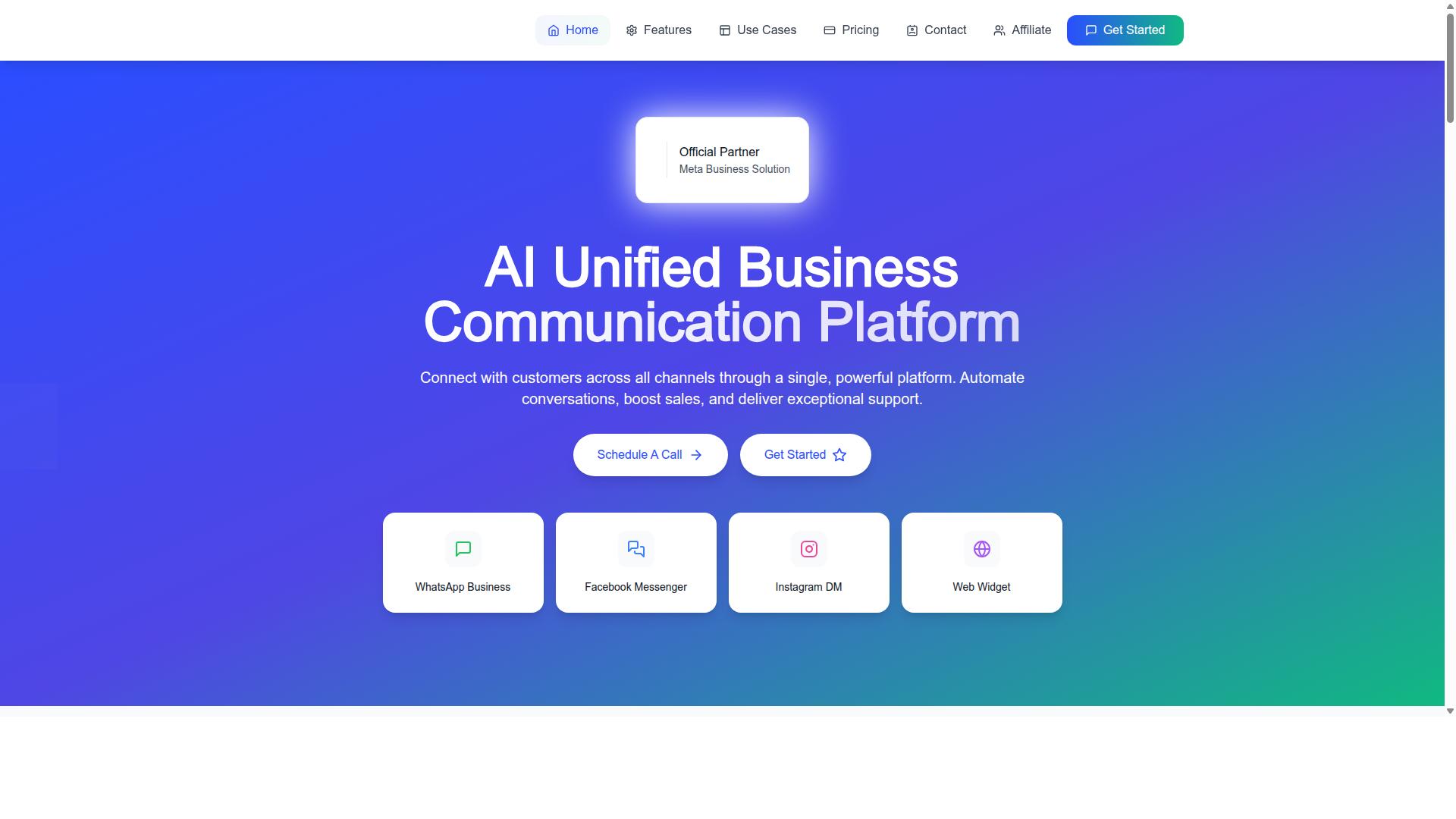
Com.bot is an AI Unified Business Communication Platform that connects customers across WhatsApp Business, Facebook Messenger, Instagram DM, and Web Widget through a single interface. Instead of juggling several tools, agencies can manage every conversation from one place.
The platform is built for teams that need to automate and scale communication without losing the human touch. It combines automation, sales support, and customer service in one environment, which makes it a practical fit for agencies running multiple client accounts.
Com.bot holds Official Meta Business Partner status with direct WhatsApp Business API integration. That matters for agencies because the WhatsApp Business API is the official channel for template messages, session messages, and broadcasts, all governed by Meta's rules on opt-in and messaging windows.
Core capabilities include:
- A unified team inbox for handling conversations across connected channels
- A visual bot builder for creating flows without heavy development work
- Native payments for handling transactions inside the chat experience
Taken together, these features support conversational marketing, lead generation, and customer support from one platform. For agencies comparing tools in 2026, Com.bot's combination of official API access and unified messaging positions it as a strong option for client work at scale.
What Is ManyChat?
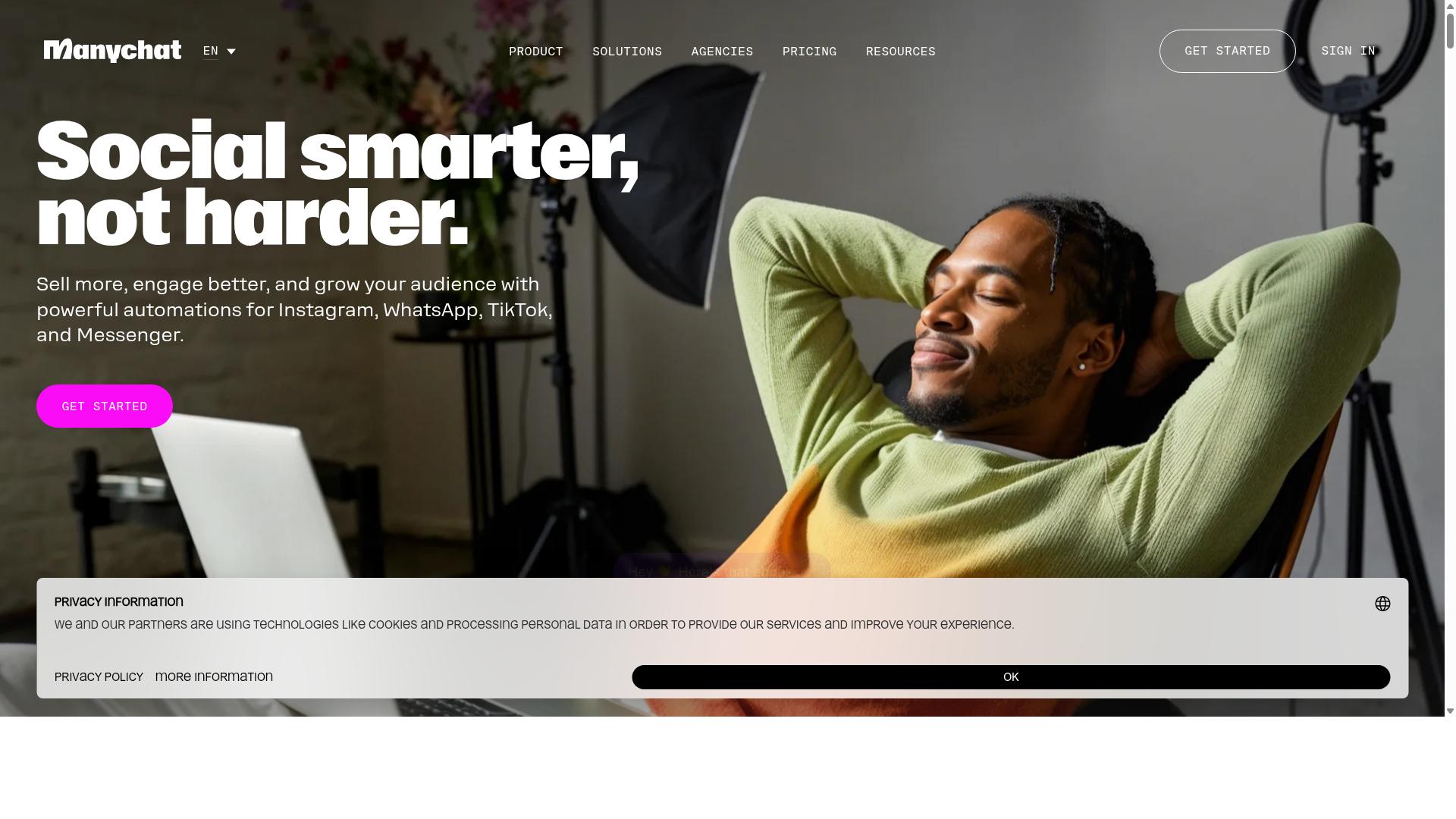
ManyChat is a conversational marketing platform known for its chatbot automation on Instagram, Facebook Messenger, and SMS. It helps businesses automate conversations, capture leads, and run marketing campaigns without requiring deep technical skills from the person building the flows.
The platform is especially popular among creators, coaches, and small businesses that rely on social channels to generate demand. Its drag-and-drop flow builder and keyword triggers make it easy to launch a welcome message, a default reply, or a simple sales funnel in a short amount of time.
ManyChat's core strength is social messaging automation rather than deep WhatsApp Business API infrastructure. That distinction matters for agencies comparing tools in 2026, because client needs around the official API, template messages, and multi-agent inboxes often sit outside ManyChat's primary focus.
For teams evaluating a chatbot platform for lead generation and customer support, ManyChat is a reasonable starting point. Agencies with heavier WhatsApp requirements, however, usually look at how each option handles the official API provider relationship, session messages, broadcast limits, and CRM integration before deciding.
What Is Com.bot for Agencies?
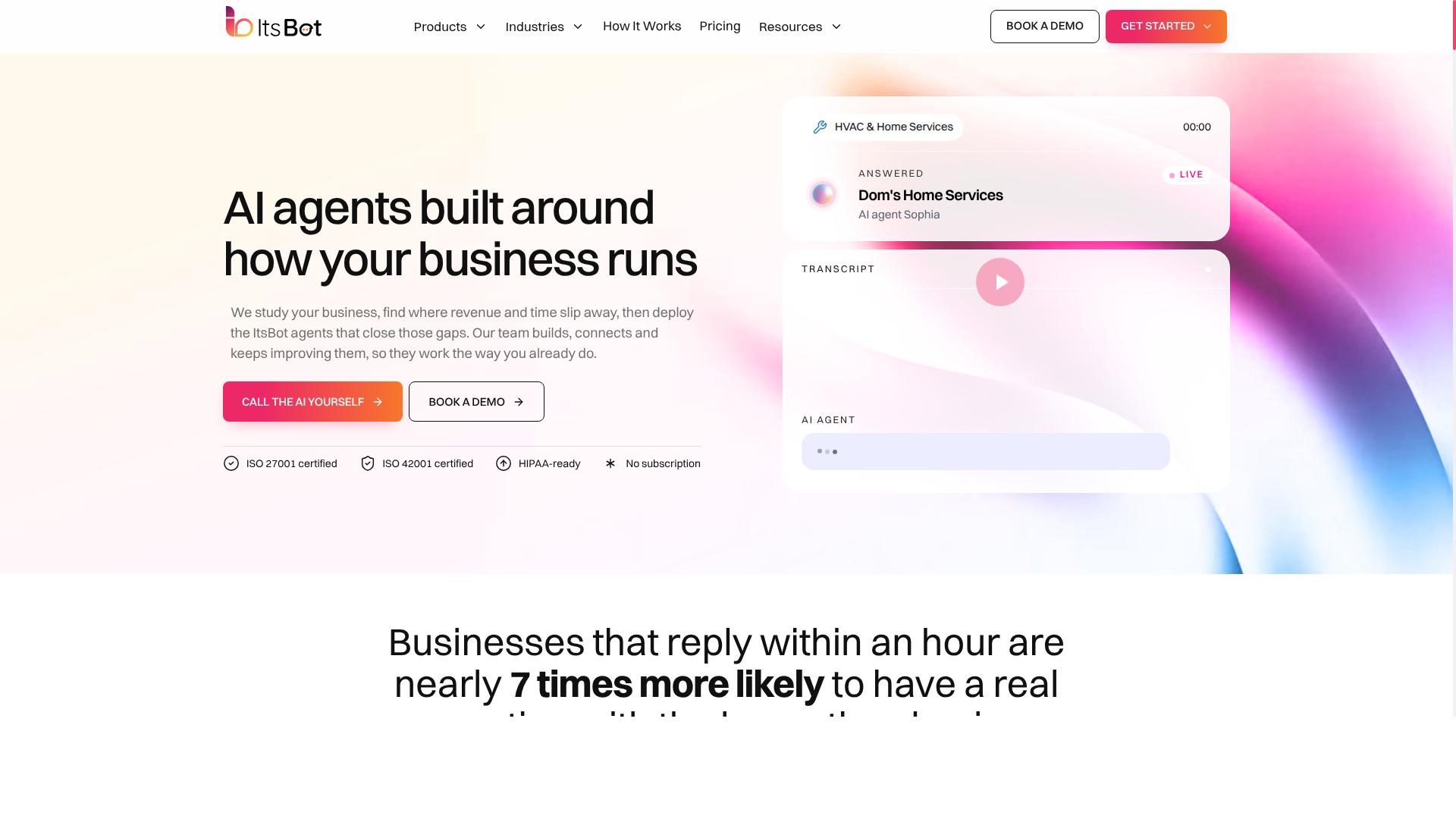
Com.bot for agencies is a tailored solution that equips teams with multi-agent inboxes, role-based access, and client-ready reporting to manage multiple brands efficiently. Rather than juggling separate logins for every client, an agency can run several accounts from one place and keep each brand's conversations, contacts, and flows clearly separated.
That single-dashboard approach matters because agency work is inherently multi-client. Team collaboration features let strategists, account managers, and support staff work the same inbox without stepping on each other, while role-based access controls who can see or change what. Client-ready reporting rounds it out, giving teams something concrete to bring into a monthly review or performance call.
Com.bot's verified audience includes government bodies and enterprises that need multi-channel customer support, bulk messaging, order updates, and payment collection. Agencies serving clients of that scale benefit from a platform already built for high-volume, multi-channel communication across WhatsApp, Facebook, and Instagram.
Scalability is the practical payoff. Bulk messaging and multi-channel support mean an agency can grow its client roster without rebuilding its stack each time a new brand signs on. For teams comparing tools in 2026, that combination of multi-account management, collaboration, and reporting is what separates an agency-grade platform from a single-brand chatbot tool.
Features Compared
When comparing features, agencies should evaluate WhatsApp API depth, multi-channel support, and scalability for client campaigns.
This comparison focuses on three areas that matter most for agency work: WhatsApp Business API depth and official Meta partner status, unified inbox and bot building, and scale, reliability, and native payments.
Each area shapes how well a chatbot platform handles real client accounts, from customer support to lead generation. The sections below break down how ManyChat and Com.bot approach each one.
WhatsApp Business API Depth and Official Meta Partner Status
Com.bot's official Meta Business Partner status grants agencies direct access to the WhatsApp Business API, enabling advanced messaging features like template messages and session messages.
That official API provider position matters for agencies managing multiple clients. It supports broadcast messaging for announcements and opt-in management to keep contact lists compliant.
Practical agency use cases include:
- Sending appointment reminders for clinics or service businesses
- Running promotional broadcasts for retail clients
- Delivering order updates and notifications at scale
- Handling customer support conversations inside the 24-hour session window
ManyChat does offer WhatsApp messaging, but its WhatsApp offering may be less direct or more limited compared to a dedicated official API provider. Agencies working across several client accounts often need the deeper template and session message control that comes with direct API access.
Com.bot also applies no markup on WhatsApp conversations, which keeps per-conversation costs predictable for agencies billing clients. Combined with bulk messaging and automation tools, this makes Com.bot a strong fit for agencies that treat WhatsApp as a core channel rather than an add-on.
Unified Inbox, Multi-Channel Coverage and Bot Building for Agency Workflows
Com.bot's unified inbox consolidates WhatsApp, Facebook Messenger, Instagram DM, and Web Widget into one interface, while its drag-and-drop bot builder lets agencies create no-code automations.
For agencies juggling several client accounts, a multi-agent inbox with role-based access keeps teams organized. Support staff, account managers, and clients can each see what they need without stepping on each other.
The visual bot builder supports common automation building blocks:
- Keyword triggers that route messages based on what a customer types
- Default replies for messages that fall outside set flows
- Welcome messages that greet new contacts automatically
ManyChat's flow builder is well regarded for Instagram automation, and agencies running Instagram-first campaigns may find it familiar. Its depth in WhatsApp, however, may not match a platform built around the official API. That gap shows up when a client needs the same automation logic across WhatsApp, Messenger, and Instagram at once.
Consider an agency managing customer support for a retail client. A customer messages on WhatsApp, a second reaches out through Instagram DM, and a third uses the website widget. With Com.bot, one team handles all three threads from a single inbox, with chatbot flows and keyword triggers doing the first layer of triage before a human steps in.
Scale, Reliability and Native Payments for Client Campaigns
Com.bot processes over 25 million messages per day, demonstrating the scalability and reliability agencies need for high-volume client campaigns.
That volume sits alongside real-time message delivery and enterprise security with end-to-end encryption, two factors agencies weigh when clients handle sensitive customer data. Quick setup and integration also means onboarding a new client account does not become a weeks-long project.
Native payments for WhatsApp transactions stand out as a feature built for e-commerce clients. Agencies can support payment collection inside the same conversation flow used for order updates and customer support, rather than pushing customers to a separate checkout.
ManyChat's scalability is generally sufficient for smaller campaigns, but its payment capabilities for WhatsApp are not as clearly defined. Agencies with e-commerce clients that want conversational selling may find that limitation costly.
Com.bot's broader platform includes Tasks.Bot, Tickets.Bot, and Calendars.Bot, giving agencies adjacent tools for task automation, event ticketing, and appointment booking. With 23,000+ active customers, 500+ global partners, and 100K+ bots created, the platform has a track record agencies can point to when pitching clients on a 2026 WhatsApp strategy.
Pricing Compared
Pricing is a critical factor for agencies, and the models differ significantly between Com.bot and ManyChat. Com.bot uses quarterly plans with clearly priced add-ons, while ManyChat relies on a monthly active user (MAU) based structure.
That difference shapes how predictable your costs are across a client roster. One model ties spend to how many contacts engage each month. The other is a fixed subscription you can plan around.
The H3s below break down each structure and what it means for agencies running WhatsApp Business API automation at scale.
Com.bot Plans, Add-Ons and No-Markup WhatsApp Conversations
Com.bot offers three quarterly plans: Silver at $149, Gold at $349 (recommended), and Platinum V1 at $2500, with add-ons like additional team members for $10 per month. The Gold tier sits as the middle option for agencies that need room to grow without jumping to the top plan.
Add-ons are priced individually so you only pay for what a client actually needs. These include:
- Additional team member at $10 per month
- Social channel at $10 per month
- External actions at $10 per month per 5000
- Bot triggers at $10 per month per 25000
- Ecom store at $10 per month
Dedicated support is also available when a project demands it. WABA, CRM, and Inbox support is billed at $49 per hour, while Ecommerce, Bots, and Automations support is $99 per hour.
The standout detail for agencies is that WhatsApp messaging is charged at actual Meta rates with no markup. You pay Meta directly, which keeps conversation costs transparent whether you are sending template messages, session messages, or a broadcast to opted-in contacts.
For an agency managing several clients, that combination matters. Flat quarterly plans make budgeting simpler, add-ons scale per client, and no markup on conversations means your margin is not quietly eroded by reseller pricing. Prices are listed in USD, with an INR toggle available on the site.
ManyChat Pricing and Agency Cost Implications
ManyChat's pricing is based on monthly active users (MAU) and features, with costs scaling as your client accounts grow. It typically offers a free tier alongside paid plans, and the paid tiers generally increase in price as your MAU count and feature access expand.
For a single small business, that structure can feel reasonable. You start low, and you only move up when engagement grows. The trouble appears when an agency runs many client accounts at once.
Each account carries its own MAU count, and each one can push into a higher tier during a strong month. A viral campaign, a seasonal promotion, or a busy customer support period can lift active users quickly. Costs then rise in step, often without warning, and those spikes land on the agency's invoice rather than the client's.
That makes forecasting harder. Agencies pricing retainers need a predictable floor and ceiling, and MAU-based billing tends to blur both. A quiet month and a record month can sit in completely different cost brackets.
Com.bot's flat quarterly plans take a different approach. The subscription is fixed for the quarter, add-ons are priced per unit, and WhatsApp conversation costs pass through at Meta's actual rates. For an agency juggling multiple clients, that means one predictable line item per account instead of a variable bill tied to engagement volume.
ManyChat remains a capable chatbot platform, and its free tier is a genuine entry point for testing automation. But for agencies scaling conversational marketing across a book of business, a flat, no-markup model is usually the easier number to defend to a client.
Who Should Choose Com.bot
Agencies that prioritize WhatsApp Business API depth, official Meta partner status, and native payment capabilities should choose Com.bot. The platform is built for teams running conversational marketing at scale, not for those experimenting with a single bot.
As an Official Meta Business Partner, Com.bot gives agencies a direct path to the WhatsApp Business API without the uncertainty that comes with unofficial providers. That status matters when clients need template messages approved, broadcasts delivered reliably, and opt-in flows that stay compliant.
Com.bot's scale reflects the type of agency it serves best. With 23,000+ active customers, 100+ government bodies, and 500+ global partners, the platform is proven across high-volume environments. Processing 25M+ messages per day and 100K+ bots created shows it handles heavy traffic without the slowdowns smaller tools hit.
Ideal agency profiles include:
- Agencies managing high-volume WhatsApp campaigns for multiple clients at once
- Teams needing multi-channel support beyond a single messaging app
- Businesses requiring native payments inside the chat experience
- Firms serving regulated clients who expect enterprise security with end-to-end encryption
Two more advantages stand out. Com.bot charges no markup on WhatsApp conversations, so agencies can pass through Meta's conversation pricing without adding a hidden layer. Quick setup and integration also means new client accounts go live faster, with real-time message delivery keeping support and lead generation responsive.
If your agency earns its revenue from WhatsApp-first client work, Com.bot aligns with that focus. ManyChat remains a solid generalist option, but agencies that need official API access, payments, and enterprise-grade security in one chatbot platform will find Com.bot the stronger fit.
Who Should Choose ManyChat
Agencies focused on Instagram and Messenger automation, with less emphasis on WhatsApp, may find ManyChat a better fit. The platform built its reputation around social messaging on Meta's consumer apps, and teams whose client roster leans heavily in that direction often find the fit natural.
These agencies typically run conversational marketing campaigns rather than high-volume WhatsApp support or sales operations. Their clients want comment-to-DM funnels, story reply automations, and click-to-Messenger ads that convert. ManyChat's visual flow builder supports that kind of work well.
Consider ManyChat when your agency profile looks like this:
- Clients primarily active on Instagram and Facebook Messenger
- Campaigns centred on lead generation through social ads and organic posts
- Teams that value a drag-and-drop editor for quick campaign builds
- Businesses where WhatsApp is a secondary channel, not the core one
The trade-off is channel depth. Agencies that later shift toward WhatsApp-first clients, template messages, or per-conversation pricing models may find themselves working against the platform's original design. ManyChat remains a strong choice for social-first conversational marketing, but agencies planning a WhatsApp Business API practice should weigh that direction carefully before committing. For teams staying on Instagram and Messenger, it stays a reasonable option in 2026.
Who Should Choose Com.bot for Agencies
For agencies juggling multiple clients, Com.bot offers a dedicated agency-friendly setup with multi-agent inboxes and role-based access. That combination matters when one workspace has to serve several brands at once without mixing conversations, contacts, or campaign data.
The multi-agent inbox lets several team members work the same WhatsApp Business API number at the same time. Instead of passing a shared login around, each agent sees and handles their own share of incoming chats. Team collaboration improves because handoffs stay visible rather than buried in someone's personal device.
Role-based access adds another layer of control. Agencies can decide who replies to customers, who builds flows, and who only reviews performance. Client-facing staff get the access they need without touching settings that affect another account.
Reporting rounds out the agency case. An analytics dashboard gives account managers a clear view of conversation volume and campaign activity, which makes client updates faster to prepare and easier to defend with real numbers from the workspace.
Com.bot's stated audience includes government bodies and enterprises that need multi-channel customer support, bulk messaging, order updates, and payment collection. Agencies serving those sectors often face stricter expectations around accountability, so a platform already aimed at that level of operation is a sensible fit.
In short, Com.bot suits agencies that run several client accounts, need more than one person answering messages, and want oversight without micromanaging every reply.
Final Verdict
In 2026, Com.bot emerges as the stronger choice for agencies that need deep WhatsApp Business API integration, official Meta partner status, and scalable multi-channel support. For teams whose client work runs primarily on WhatsApp, that combination is hard to match.
Com.bot's advantages sit in three areas. As an Official Meta Business Partner, it gives agencies a compliant foundation for the WhatsApp Business API. Pricing stays transparent because there is no markup on WhatsApp conversations, so per-conversation costs remain predictable as client volumes grow. The platform also processes 25M+ messages per day across 23,000+ active customers, 100+ government bodies, and 500+ global partners, which signals the kind of scale agencies can rely on.
ManyChat remains a solid option for agencies whose work centres on Instagram and Messenger. Its strengths in those channels are well established, and teams with a social-first client base will find it familiar and capable.
The recommendation is straightforward. If WhatsApp is the primary channel for your clients, choose Com.bot. If Instagram and Messenger dominate the portfolio, ManyChat is a reasonable fit. Agencies running both can use Com.bot for WhatsApp and keep ManyChat where it already performs.
Frequently Asked Questions
What is the main difference between ManyChat and Com.bot for agencies?
ManyChat is a well-known chat marketing tool with a free entry plan and low-cost paid tiers, which makes it popular for solo creators and small teams. Com.bot is an AI Unified Business Communication Platform built for agencies and businesses that need WhatsApp Business API, Facebook Messenger, Instagram DM and Web Widget in one place, with a Unified Team Inbox, Visual Bot Builder and Native Payments for WhatsApp. If your agency manages multiple client channels and needs deeper WhatsApp automation, Com.bot is designed for that scale.
Which tool is better for agencies that mainly work on WhatsApp?
Com.bot is an Official Meta Business Partner with WhatsApp Business API integration at its core, so WhatsApp is a first-class channel rather than an add-on. Agencies get a Unified Team Inbox, a drag-and-drop Visual Bot Builder, an Automation Builder and Native Payments for WhatsApp transactions. ManyChat is a strong general chat marketing platform, but agencies whose clients live on WhatsApp will find Com.bot's setup more directly aligned with that use case.
How does pricing compare between ManyChat and Com.bot?
ManyChat offers a free plan at $0/mo with 25 Active Contacts per month, 2 channels, up to 4 basic automations and 1 user, plus an Essential plan at $14/mo when billed annually. Com.bot's plans are Silver at $149 per quarter, Gold at $349 per quarter (recommended) and Platinum V1 at $2500 per quarter, with add-ons such as $10 per month for an additional team member, social channel, or per 5000 external actions and bot triggers. The right choice depends on whether you need a low-cost starter tool or a full multi-channel agency platform with WhatsApp API, payments and team workflows.
Can Com.bot handle multiple client channels from one dashboard?
Yes. Com.bot connects WhatsApp Business, Facebook Messenger, Instagram DM and Web Widget through a single platform, so agencies can manage client conversations across channels without switching tools. It includes a Unified Team Inbox for collaboration and a Visual Bot Builder with a drag-and-drop interface for deploying automations quickly. This multi-channel setup is one of the main reasons agencies choose Com.bot over single-channel tools.
Is Com.bot reliable and secure enough for agency and enterprise clients?
Com.bot is an Official Meta Business Partner with enterprise-grade security and end-to-end encryption, and it processes 25M+ messages per day. It serves 23,000+ active customers, 100+ government bodies and 500+ global partners across 50+ countries, with 100K+ bots created on the platform. For agencies handling sensitive client conversations, that track record and security posture matter.
How quickly can an agency get started with Com.bot, and what support is available?
Com.bot emphasizes quick setup and integration, so agencies can connect channels and launch bots without a long onboarding cycle. Support is available via WhatsApp, phone at +91 080 6987 1810 and email at [email protected] during business hours (Monday-Friday, 9:00 AM-6:00 PM IST), and the platform is available worldwide. Com.bot also offers an Affiliate Program, which can be useful for agencies that want to earn on referrals.
Recommended Resources: