
How Much Do the Best Tools for WhatsApp Sales Automation Cost in 2026
WhatsApp sales automation quotes rarely arrive as a single number. Per-conversation charges, seat fees, and platform subscriptions stack up fast, and some tools add their own markup on top of Meta's conversation rates. By the end of this article, you will know what the best tools charge in 2026 and how each pricing model affects your monthly bill. You will also see Com.bot's Silver, Gold, and Platinum tiers side by side, what add-ons cost, and which plan fits your team size and sales volume.
What Is Com.bot? Who It Serves and What It Does
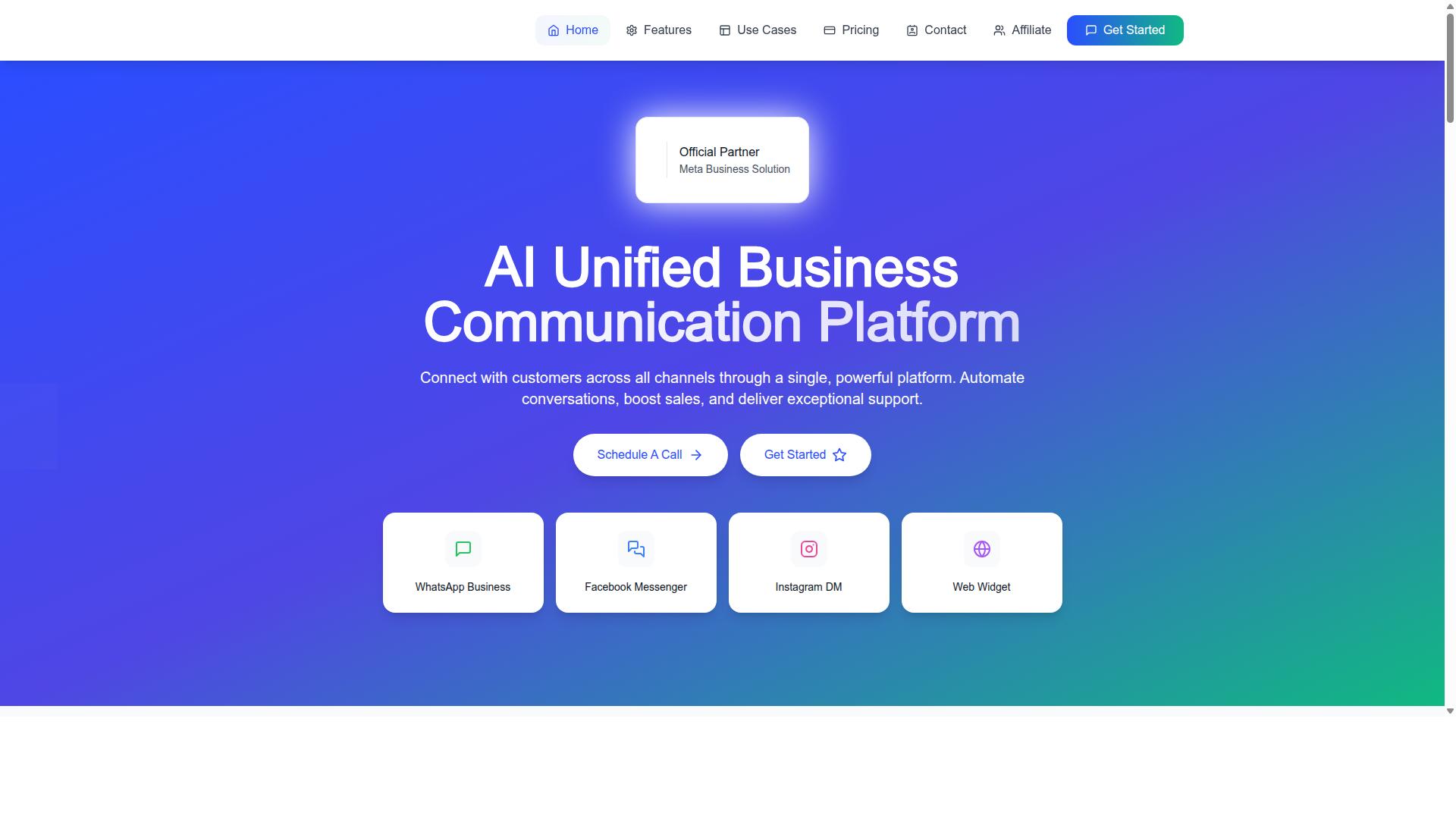
Com.bot is an AI-powered unified business communication platform that connects customer conversations across WhatsApp Business, Facebook Messenger, Instagram DM, and web widgets into a single interface. Instead of juggling four separate apps, sales and support teams work from one shared view of every conversation.
For businesses weighing WhatsApp sales automation in 2026, that consolidation matters. It shapes how many seats a team needs, how leads get routed, and ultimately how predictable the monthly cost becomes.
Com.bot is owned and managed by Com Bot AI Limited and is an Official Meta Business Partner with direct WhatsApp Business API integration. That partner status is not a marketing label. It means the platform connects to WhatsApp through Meta's official channel rather than through workarounds, which is the foundation serious vendors build on.
Those three facts answer the basic question of what Com.bot is: a single platform for messaging-led sales and support, backed by official API access, and operated by a named company rather than an anonymous reseller.
Com.bot is a SaaS solution built for businesses that want to automate and scale sales and support on messaging channels. Its core capabilities cover the full journey from first message to closed sale:
- WhatsApp Business API integration through official Meta partnership
- A no-code visual bot builder for automating conversations without developers
- A unified team inbox that keeps every channel in one place
- Native payment processing so transactions can happen inside the conversation
Together, these capabilities support the outcomes buyers care about: automated conversations, sales boosting, and exceptional support delivery.
That flow is what separates WhatsApp sales automation from simple auto-replies. It also explains why platform choice affects total cost. A tool with native payments and a shared inbox may replace several subscriptions at once, while a cheaper chatbot alone often leaves gaps that require extra software.
Com.bot serves a global audience across a wide range of organization types. Its user base spans enterprises, government bodies, and SMBs, which means the platform is designed to handle both high-volume, multi-team operations and lean businesses running sales from a small team.
For an SMB, that might mean one inbox and a handful of automated flows. For an enterprise or public-sector body, it means the same core platform scaled across departments and channels. The pricing implications differ, but the underlying question is the same: what does the platform cost relative to the conversations and revenue it manages?
That question is the focus of this article. The sections ahead break down how WhatsApp sales automation pricing typically works in 2026, including subscription fees, monthly plans, annual billing, per-user pricing, tiered pricing, usage-based pricing, and the hidden costs that catch buyers off guard.
With the platform itself clearly defined, the next step is understanding the cost structures that apply to Com.bot and to this category of software as a whole.
How Much Do the Best WhatsApp Sales Automation Tools Cost in 2026? The Direct Answer
In 2026, the cost of WhatsApp sales automation tools ranges from $50 to over $2,500 per quarter, depending on the provider, plan tier, and usage volume. That spread is wide because vendors bundle very different things: some charge mainly for software access, while others fold WhatsApp message fees, onboarding, and support into the subscription.
Most platforms fall into one of three pricing models: per-conversation, per-seat, or flat-rate. A smaller group mixes two of them, such as a base fee plus usage-based pricing once you cross a set threshold.
One factor shapes total cost more than any other: whether a vendor marks up WhatsApp's own conversation fees. Some platforms pass those charges through with no markup, which can cut real-world spend dramatically for high-volume senders.
The sections below break down each model, the hidden costs that catch buyers off guard, and why a no-markup policy often matters more than the sticker price of the subscription itself.
What Drives Pricing: Per-Conversation, Per-Seat, and Flat-Rate Models
Three primary pricing models dominate WhatsApp sales automation: per-conversation (charging for each 24-hour session), per-seat (charging per agent or user), and flat-rate (a fixed monthly or quarterly fee with usage limits). Each shifts risk and predictability in a different direction.
Per-conversation pricing ties cost directly to activity. WhatsApp itself charges businesses per 24-hour conversation window, and vendors on this model typically bill from $0.005 to $0.10 per conversation on top of that. Some add a markup to Meta's fee; others pass it through at cost. This model suits businesses with spiky or seasonal message volume.
Per-seat pricing scales with team size rather than message volume, usually from $10 to $50 per user per month. It is predictable for small teams but gets expensive fast as sales headcount grows, even if individual agents send few messages.
Flat-rate pricing runs from roughly $100 to $1,000 per month and offers the clearest budgeting. The trade-off is overage fees when you exceed included conversation or contact limits.
Watch for costs outside the headline plan:
- Setup fees, sometimes several hundred dollars
- Onboarding and migration charges
- WhatsApp Business API access fees
- Charges for extra users, numbers, or integrations
Why "No Markup on WhatsApp Conversations" Changes the Real Cost
Many WhatsApp automation vendors add a markup of 10% to 50% on top of Meta's conversation fees, which can inflate costs by hundreds or thousands of dollars monthly for high-volume senders. That markup is often buried in the fine print rather than shown on the pricing page.
Meta charges businesses per 24-hour conversation, and rates vary by country and by conversation category: marketing, utility, authentication, and service. Marketing conversations generally cost the most, while service conversations initiated by customers are often cheaper or free within a defined window.
The math is straightforward. If a business runs 10,000 conversations per month at an average Meta fee of $0.05, the base cost is $500. A 20% vendor markup adds $100 every month, or $1,200 per year, for nothing more than the vendor's billing layer.
Vendors that are official Meta Business Partners can pass conversation fees through without markup. For high-volume senders, that single policy can outweigh differences in subscription price between two otherwise similar platforms.
No-markup policies also make total cost of ownership more predictable. You pay the platform for software and Meta for messaging, with no variable surcharge layered on top. When comparing quotes, ask each vendor directly whether their per-conversation rate includes a markup and how it tracks Meta's published rates.
Com.bot's Pricing: Plans and What Each Tier Includes
Com.bot offers three quarterly subscription tiers-Silver at $149, Gold at $349 (recommended), and Platinum V1 at $2,500-each designed for different business sizes and needs. Every plan is billed quarterly in USD, though the site offers an INR toggle for buyers who prefer to check currency options before purchasing.
What makes this structure straightforward is that core capabilities appear across all tiers. The visual bot builder and unified inbox are included regardless of which plan a business selects, so teams are not forced into an upgrade just to access the fundamentals of WhatsApp sales automation.
Beyond the base subscription, Com.bot keeps customization modular. Add-ons cover additional team members, extra social channels, and external actions, which means a growing business can expand capacity without jumping to a higher tier prematurely.
One detail worth noting for budgeting: WhatsApp messaging itself is charged at actual Meta rates with no markup. That keeps conversation costs predictable and separate from the software subscription fee, which is a meaningful distinction when comparing total cost of ownership across platforms in 2026.
The three tiers differ mainly in team seats, automation depth, and support level. The next subsection breaks down exactly what each plan includes so buyers can match a tier to their pipeline volume and headcount.
Silver, Gold, and Platinum V1 Plans Compared
The Silver plan at $149 per quarter is ideal for small teams getting started, while the Gold plan at $349 per quarter adds more team members and advanced automation, and the Platinum V1 at $2,500 per quarter caters to enterprises with high-volume needs.
Each tier builds on the one below it. Silver covers the essentials, Gold is the recommended option for scaling sales operations, and Platinum V1 targets organizations that need the highest limits and the strongest security posture.
| Plan | Price (per quarter) | Positioning | Best Fit |
|---|---|---|---|
| Silver | $149 | Basic bot building, a set number of team members, standard support | Small teams getting started with WhatsApp sales automation |
| Gold | $349 (Recommended) | Increased team seats, advanced automation, priority support | Growing sales teams managing an active lead pipeline |
| Platinum V1 | $2,500 | Dedicated support, higher limits, enterprise-grade security | Enterprises with high-volume messaging and compliance needs |
For a small business, Silver keeps entry costs low while still delivering the visual bot builder and unified inbox. A team running a modest broadcast messaging schedule or a single sales funnel will likely find it sufficient.
Gold suits teams that have outgrown shared seats and need more sophisticated automation across their pipeline. Priority support matters here too, since faster resolution protects conversion rates during high-traffic campaigns.
Platinum V1 is built for scale. Dedicated support, higher usage limits, and enterprise-grade security address the concerns that surface when WhatsApp becomes a primary revenue channel rather than a side experiment.
Add-Ons and Dedicated Support Rates
Com.bot offers add-ons such as additional team members for $10 per month, extra social channels for $10 per month per channel, and external actions at $10 per 5,000 actions. These let a business customize its setup without upgrading the entire plan.
Additional add-ons follow the same $10 per month structure, including bot triggers priced per 25,000 and an ecom store module. For teams that only occasionally need more capacity, this modular approach is often cheaper than moving up a tier.
- Additional team member: $10 per month
- Extra social channel: $10 per month per channel
- External actions: $10 per 5,000 actions
- Bot triggers: $10 per 25,000 triggers
- Ecom store: $10 per month
Dedicated support is quoted separately and rates may vary by need. Published rates list WABA, CRM, and Inbox support at $49 per hour, while Ecommerce, Bots, and Automations support runs at $99 per hour. Businesses with complex requirements should contact sales for an accurate quote.
This structure keeps hidden costs to a minimum. There are no bundled surprises: messaging runs at actual Meta rates, add-ons are priced individually, and support is available on an hourly basis when a team wants hands-on help beyond the standard plan coverage.
Key Features That Justify the Cost
Com.bot's feature set is designed to deliver measurable ROI through automation, multi-channel support, and seamless payment processing. When evaluating WhatsApp sales automation pricing in 2026, the smartest approach is to compare what each subscription fee actually buys, not just the headline number.
Cheap tools often charge less because they do less. A platform that only sends bulk messages may look affordable on a monthly plan, yet it forces teams to bolt on separate inboxes, payment links, and CRM connectors, each with its own subscription fees and hidden costs.
Com.bot bundles the capabilities that drive revenue into one platform. Its WhatsApp Business API integration anchors the stack, while the visual bot builder, automation builder, and native payments handle the work that directly moves buyers through the sales funnel.
For teams weighing tiered pricing against usage-based pricing, the deciding factor is usually conversion impact. Features that shorten response times, remove payment friction, and keep conversations organized tend to pay for themselves faster than any line-item discount.
Visual Bot Builder, Automation Builder, and Native Payments
The drag-and-drop visual bot builder enables users to create complex chatbots without coding, while the automation builder sets up triggers for lead nurturing, and native payments allow transactions directly within WhatsApp. Together, these three tools form the engine room of Com.bot's sales automation.
The Visual Bot Builder uses a drag-and-drop interface, so a sales or support team can map conversation flows and deploy smart chatbots across channels without writing code. Order updates, notifications, and customer support answers can all run automatically.
The Automation Builder connects to more than 1000 integrations. Teams can trigger follow-up messages after a purchase, route hot leads to sales reps, and keep pipeline management running in the background. Bulk messaging and template messages handle outbound campaigns at scale.
Native Payments let customers pay without leaving the chat. Payment collection happens inside WhatsApp, which cuts the drop-off that occurs when buyers are redirected to an external checkout page.
Consider a typical flow. A shopper taps a broadcast message, the bot answers product questions, the automation builder tags the lead, and native payments close the sale in the same thread. Fewer steps mean higher conversion rates and stronger ROI on the subscription.
Unified Team Inbox and Multi-Channel Support
The unified team inbox consolidates conversations from WhatsApp, Facebook Messenger, Instagram DM, and web widgets into one interface, allowing agents to respond quickly and consistently. Instead of juggling browser tabs, a team works from a single dashboard.
Multi-channel support means every incoming inquiry lands in the same place, whether it started on Instagram or WhatsApp. Agents can assign conversations, reply with canned responses, and use role-based access so the right people see the right threads. This structure reduces response times and keeps customer engagement steady during peak periods.
CRM integration syncs customer data back to the sales funnel, so lead generation and pipeline management stay current without manual entry. Order updates, notifications, and customer support tickets flow through the same system, giving managers a clear view of team workload.
Picture a retail business using Com.bot to handle inquiries from Instagram and WhatsApp in one place. A question about sizing arrives on Instagram, an order status check comes through WhatsApp, and both are answered by the same agent from one screen. Customers get faster, more consistent replies, and satisfaction improves.
For buyers comparing monthly plans in 2026, this consolidation matters. A unified inbox and multi-channel support replace several standalone tools, which means fewer subscription fees, less onboarding overhead, and a lower total cost of ownership across the year.
Trust Signals: Scale, Security, and Track Record
Com.bot is an official Meta Business Partner with over 23,000 active customers, 100+ government bodies, and 500+ global partners, processing more than 25 million messages daily. Those numbers matter when you are weighing WhatsApp sales automation pricing, because a platform's staying power directly affects your total cost of ownership over time.
A cheap subscription fee means little if the vendor disappears in a year or cannot handle your message volume during peak season. Scale and stability are part of the real cost equation, and they are often the hardest factors to judge from a pricing page alone.
This section breaks down the trust signals worth checking before you commit budget to any WhatsApp sales automation platform in 2026.
Customer base as a credibility measure. A vendor serving 23,000+ active customers has already survived the scrutiny of thousands of buying decisions. Businesses rarely stay on a platform that fails to deliver on its promises, so a large active base suggests the product works as advertised.
Public sector adoption. The fact that 100+ government bodies rely on Com.bot is a meaningful signal. Government procurement processes tend to be strict about security, compliance, and vendor reliability, so this kind of adoption is not easy to earn.
Partner ecosystem. With 500+ global partners, Com.bot has built a network that extends its reach and support capacity. For buyers, a broad partner network often means more integration options and local expertise.
Volume handling. Processing 25M+ messages per day demonstrates infrastructure built for high throughput. If your sales funnel depends on timely broadcast messaging and template messages, proven volume capacity reduces the risk of delivery delays hurting conversion rates.
Platform maturity. Over 100K+ bots created on the platform shows that businesses are not just signing up, they are actively building and deploying automation. That level of activity points to a mature, well-used toolset rather than an untested product.
When comparing subscription fees across vendors, weigh these signals alongside the price tag. A platform with a proven track record can reduce hidden costs later, such as migration expenses, downtime losses, or the expense of switching providers mid-year.
Security and compliance round out the trust picture. Com.bot provides enterprise security with end-to-end encryption, which matters for any business handling customer conversations and lead data through the WhatsApp Business API.
For teams evaluating pricing in 2026, the strongest value often comes from platforms that combine transparent costs with verifiable scale. Com.bot's combination of a large customer base, government and partner adoption, high message volume, and enterprise-grade security makes it a dependable choice for WhatsApp sales automation.
Who Should Use Com.bot - and Which Plan Fits
Com.bot is best suited for businesses of all sizes that rely on WhatsApp, Facebook, and Instagram for sales and support, from small teams to large enterprises and government agencies. The platform's target audience is defined by one common need: automating and scaling communication across those three channels.
That scope covers bulk messaging, order updates, payment collection, and multi-channel customer support. Because the needs behind those tasks vary so widely, matching a team's size and volume to the right tier matters more than picking the highest one available.
Below is a practical way to think about which plan fits which type of operation.
Small businesses (1-10 team members): Silver. At this stage, the priority is handling repetitive conversations without adding headcount. A small e-commerce store, for example, can use Silver to automate order updates, so buyers receive status messages on WhatsApp without anyone sending them manually.
The same logic applies to a boutique service provider fielding the same questions daily. Silver keeps the essentials running while the team stays focused on closing sales rather than copying and pasting replies.
Growing businesses (11-50 team members): Gold. Once a company has multiple people touching customer conversations, coordination becomes the bottleneck. Gold suits teams that need to route inquiries, keep a shared view of the sales funnel, and support higher message volumes across channels.
A mid-sized clinic is a good example. Appointment reminders, rescheduling requests, and follow-up messages can all run through automation, which reduces no-shows and frees front-desk staff for in-person patients. A growing retailer with a busier pipeline would see similar benefits.
Large enterprises and government bodies: Platinum V1. Organizations with high volume and custom requirements need more than a standard tier. Platinum V1 is built for that segment, including government agencies delivering citizen services over messaging channels.
A public agency, for instance, might use it to handle large-scale notifications, collect payments, and manage support requests across WhatsApp, Facebook, and Instagram at once. Enterprises with comparable demands, such as bulk messaging at scale or multi-channel support operations, fall into the same category.
Choosing well comes down to three questions:
- How many people will manage conversations day to day?
- How much volume flows through WhatsApp, Facebook, and Instagram combined?
- How custom do your workflows and integrations need to be?
Small teams with straightforward needs fit Silver. Mid-sized operations with coordination demands fit Gold. High-volume organizations with custom requirements fit Platinum V1. Matching on those three factors keeps subscription costs aligned with actual usage rather than paying for capacity a team will not use.
Final Verdict: Is Com.bot Worth the Price in 2026?
For businesses seeking a no-markup, feature-rich WhatsApp sales automation platform, Com.bot offers strong value, especially for those processing high conversation volumes. The platform's approach to pricing keeps the cost structure predictable: you pay for the software subscription, and you are not charged a markup on the WhatsApp conversations your business runs through it.
That distinction matters in 2026. Many vendors in this space layer message-based or conversation-based fees on top of their subscription, which makes forecasting monthly spend difficult. Com.bot's model avoids that stacking, so the total cost stays tied to the plan you choose rather than to how much your team talks to customers.
The feature set backs up the price. Com.bot covers WhatsApp sales automation essentials such as chatbots, CRM integration, lead generation, broadcast messaging, and pipeline management. For teams running a full sales funnel on WhatsApp, that combination reduces the need to stitch together separate tools.
Scalability is another point in its favor. Because there is no markup on conversations, growing message volume does not quietly inflate your bill, which is a common source of hidden costs with usage-based platforms. Add-on flexibility also lets you extend capability as your needs change instead of jumping to a higher tier prematurely.
The pros and cons are worth weighing honestly:
- Pros: official Meta partnership through the WhatsApp Business API, no markup on conversations, a broad automation feature set, scalable for high-volume senders, and flexible add-ons.
- Cons: a quarterly billing requirement, and a higher entry point for the Platinum tier compared with the lower plans.
Those trade-offs are modest relative to the value. Quarterly billing is a cash-flow consideration rather than a capability limitation, and the Platinum entry point reflects a more advanced tier rather than a barrier to getting started. For most businesses, the deciding factor is whether WhatsApp carries real revenue weight in their sales funnel.
If your business relies heavily on WhatsApp and needs advanced automation, Com.bot is worth the investment. The combination of transparent pricing, no conversation markup, and a proven track record makes the ROI case straightforward for high-volume operations. Businesses with lighter messaging needs may find the entry tiers sufficient, while larger teams can scale into Platinum as volume and complexity grow.
To evaluate fit before committing, reaching out to the sales team is the practical next step. A demo or trial lets you map the platform against your actual workflows, message volumes, and integration requirements rather than estimating from a feature list alone.
Com.bot's contact details are listed below:
| Contact Channel | Details |
|---|---|
| Head Office | 501, Trinity Orion, Vesu Main Road, Surat - 395010, IN |
| Phone / WhatsApp | +91 080 6987 1810 |
| [email protected] | |
| Business Hours | Monday - Friday: 9:00 AM - 6:00 PM IST |
| Social | WhatsApp Support available |
In short, the verdict for 2026 is clear. If WhatsApp is central to how you generate and convert leads, Com.bot's no-markup model, official Meta standing, and deep automation feature set make it a sound investment rather than an expense to second-guess.
Frequently Asked Questions
How much does Com.bot cost for WhatsApp sales automation in 2026?
Com.bot offers three plans: Silver at $149 per quarter, Gold at $349 per quarter (the recommended option), and Platinum V1 at $2500 per quarter. Optional add-ons are available at $10 per month for items such as an additional team member, a social channel, external actions (per 5,000) and bot triggers. For the most current pricing, it's best to confirm directly with Com.bot before you buy.
What's the difference between the Silver, Gold and Platinum plans?
All three plans give you access to Com.bot's core platform, including WhatsApp Business API integration, the Unified Team Inbox and the Visual Bot Builder. The plans differ in scale and capacity, so the right choice depends on your team size, message volume and how many channels you need. Gold is the recommended plan for most growing businesses, while Platinum V1 is built for larger, higher-volume operations.
Are there any extra costs on top of the plan price?
Yes - Com.bot offers add-ons priced at $10 per month for things like an additional team member, an extra social channel, external actions (per 5,000) and bot triggers. These let you expand capacity without changing your base plan. Keep in mind that WhatsApp itself may charge conversation-based fees separately, so factor that into your total budget.
Is Com.bot cheaper than other WhatsApp sales automation tools?
Pricing across the market varies widely depending on features, message volume and whether tools charge per seat or per conversation, so there's no single "cheapest" option. What matters more is total cost of ownership - including setup, add-ons and WhatsApp fees. Com.bot's quarterly plans and transparent add-on pricing make it easy to compare against alternatives on a like-for-like basis.
Can I try Com.bot before committing to a paid plan?
Com.bot emphasizes quick setup and integration, so you can get connected to WhatsApp Business, Facebook Messenger, Instagram DM and the Web Widget without a lengthy onboarding process. To ask about a trial, demo or the best plan for your use case, contact the team at [email protected] or via WhatsApp at +91 080 6987 1810. They can walk you through what's included before you commit.
What do I actually get for the price - is it worth it?
Every Com.bot plan includes an AI Unified Business Communication Platform that connects WhatsApp, Facebook Messenger, Instagram DM and the Web Widget in one place, plus a Visual Bot Builder, Unified Team Inbox and Native Payments for WhatsApp transactions. Com.bot is an Official Meta Business Partner serving 50+ countries, with 23,000+ active customers and 25M+ messages processed daily. For businesses automating sales and support at scale, that combination typically offsets the subscription cost quickly.
Recommended Resources: